- William L. Hawkins (b. 1895)
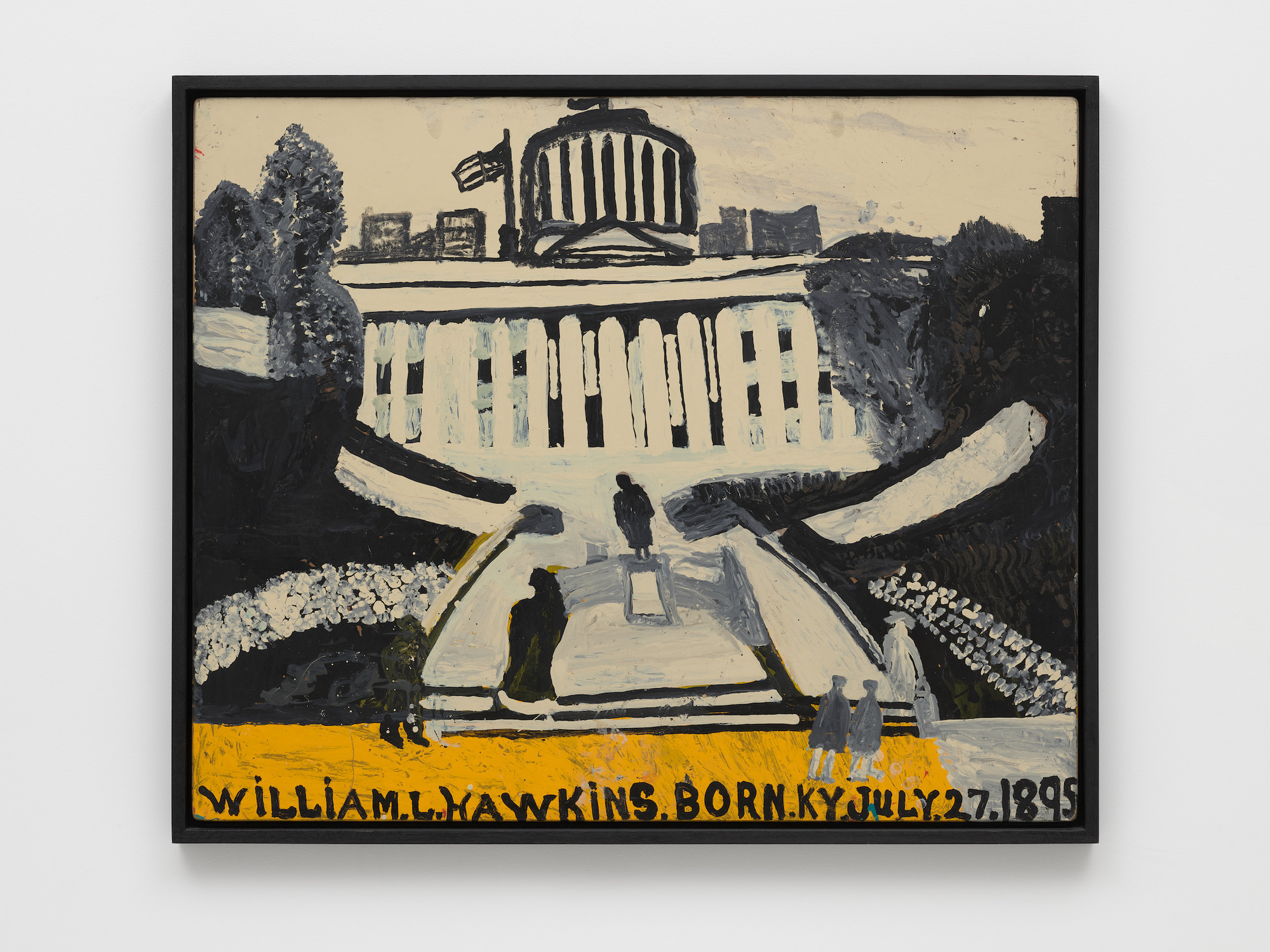
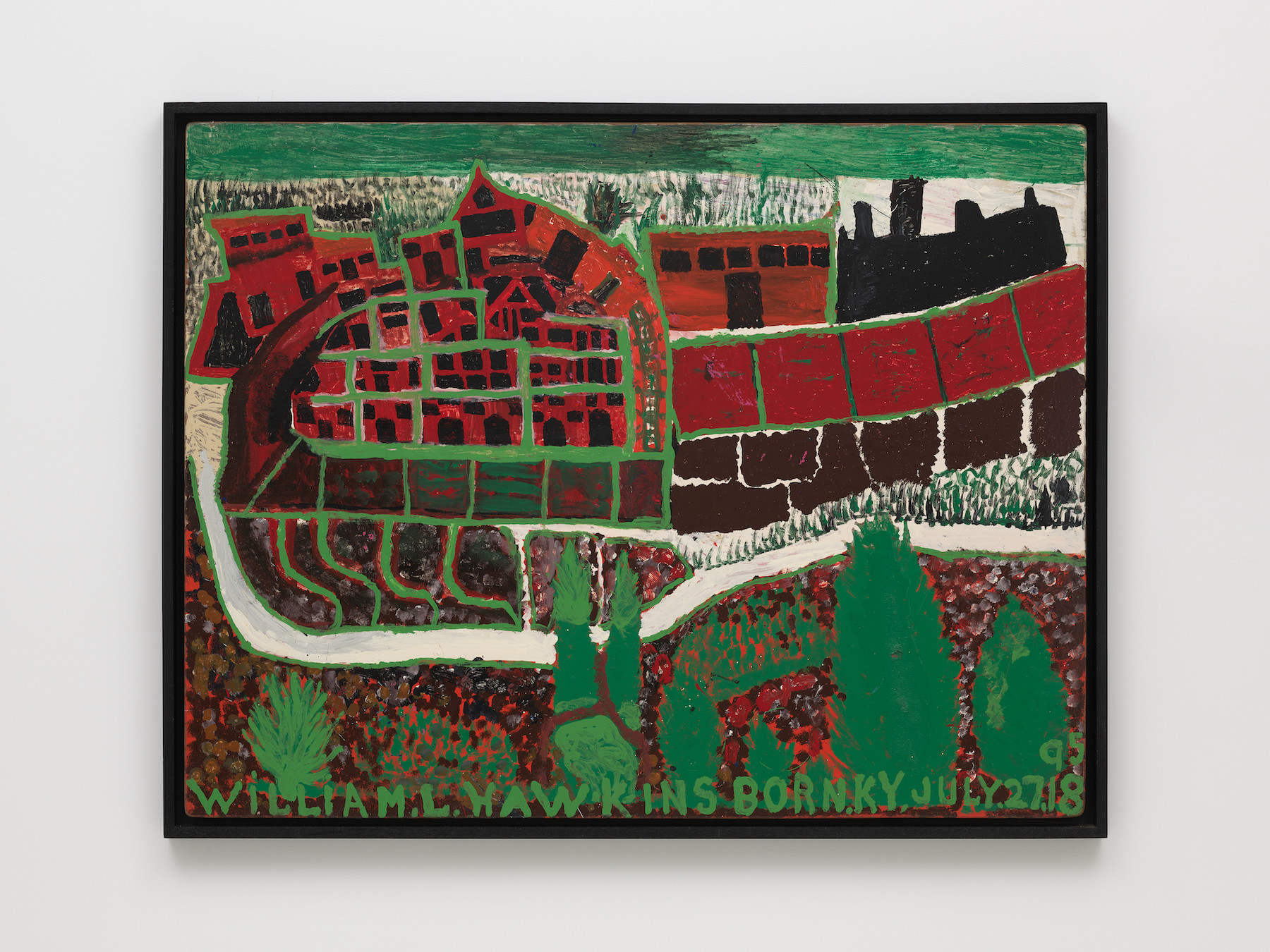
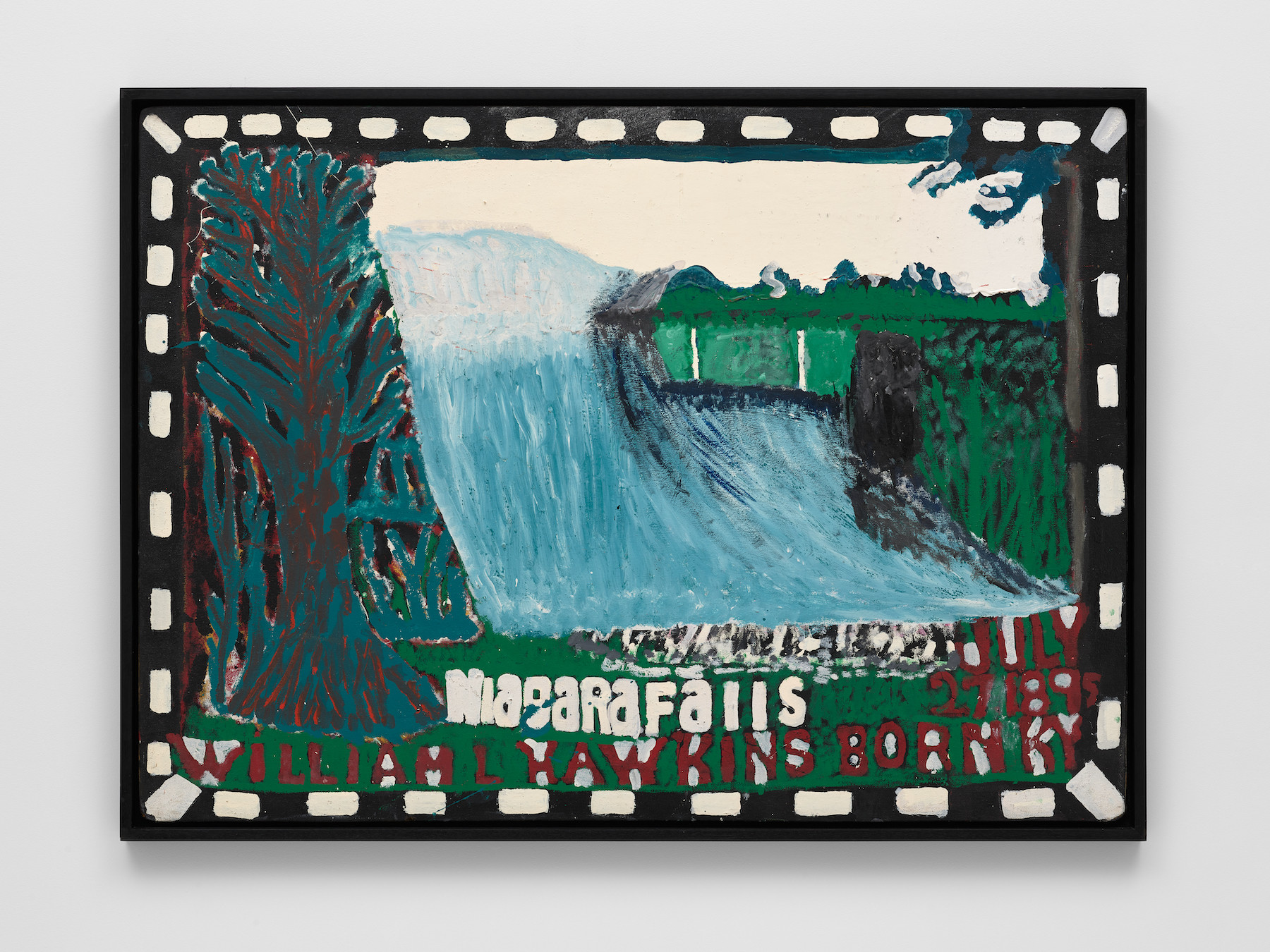
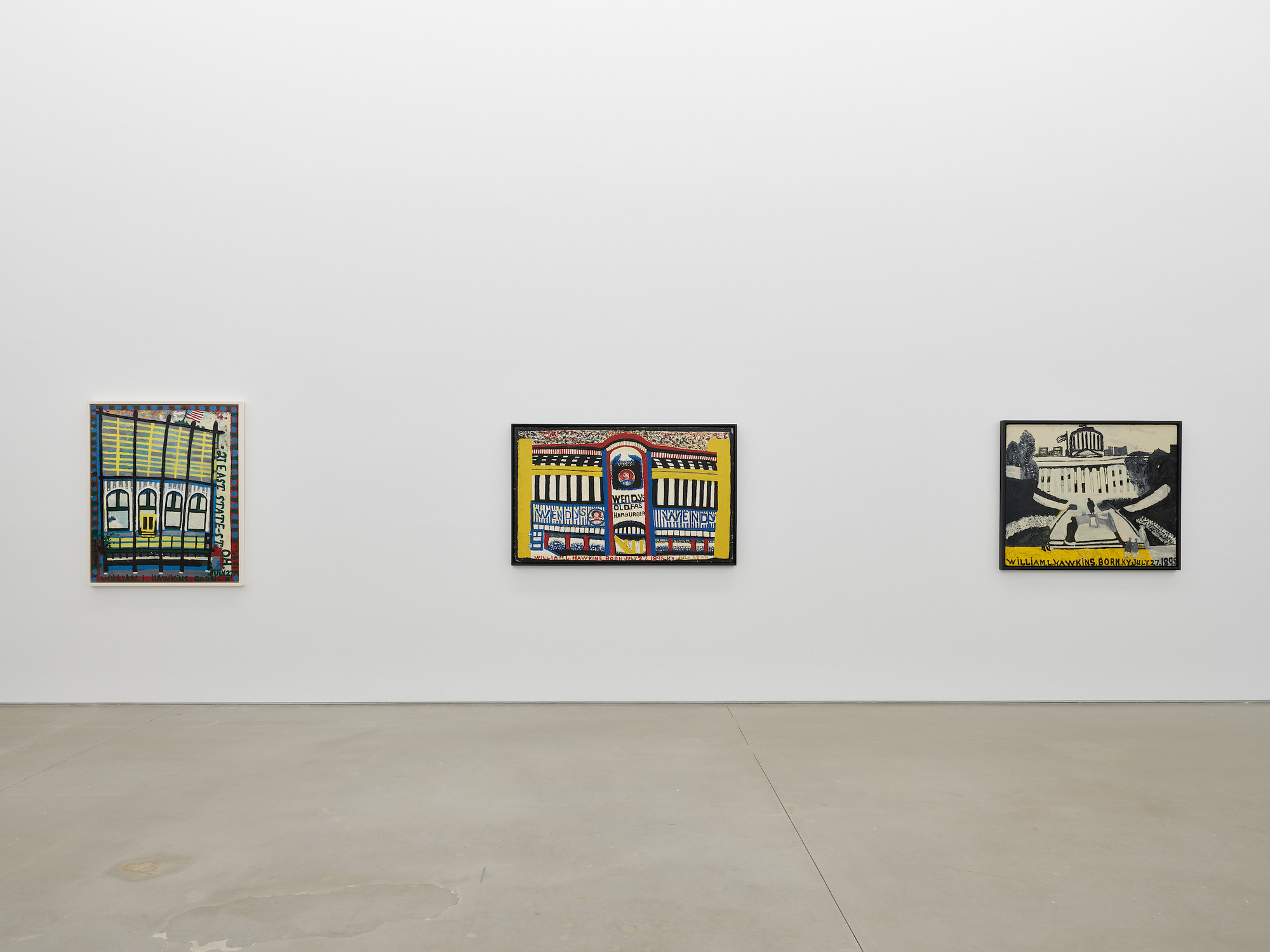
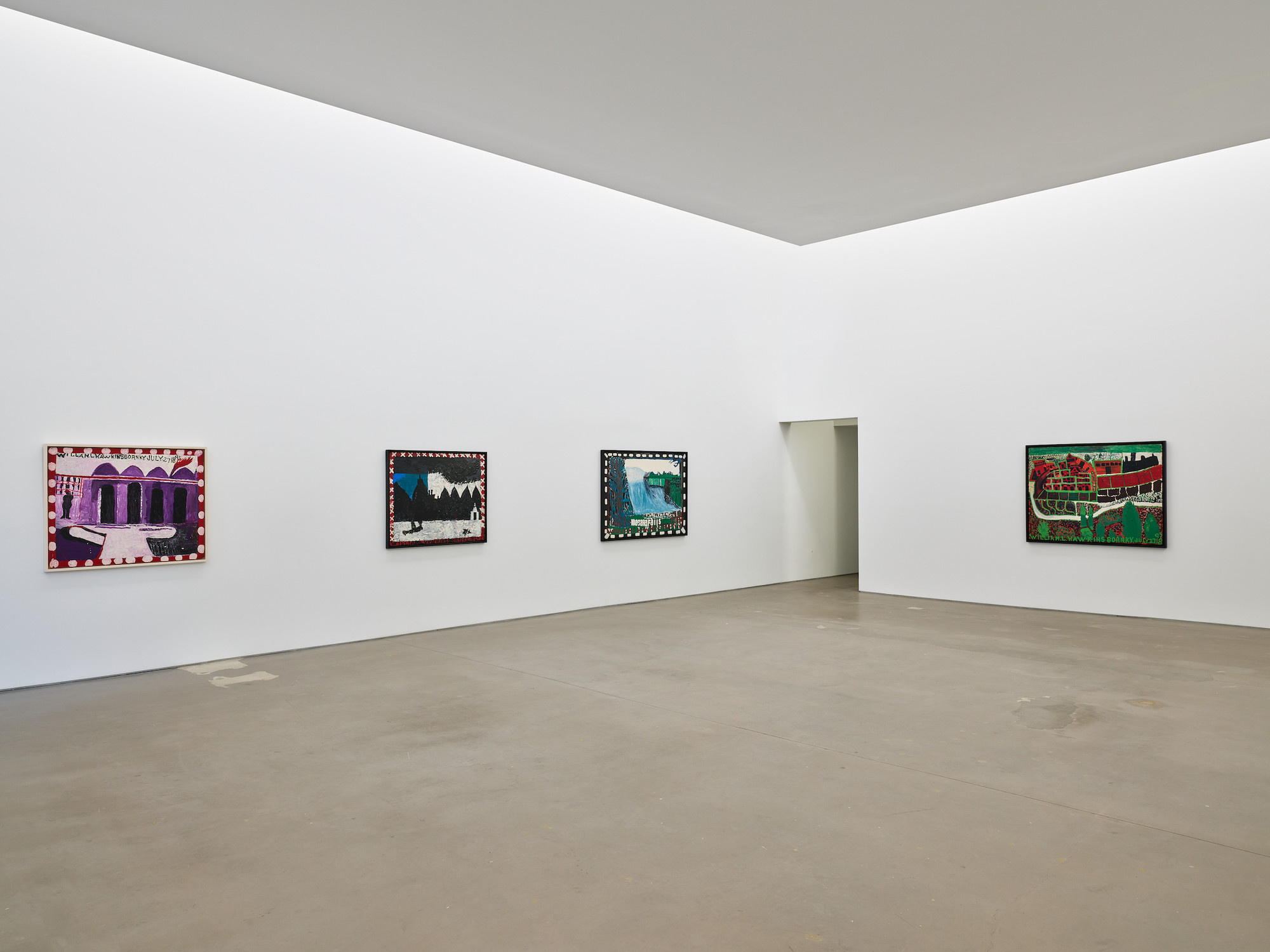
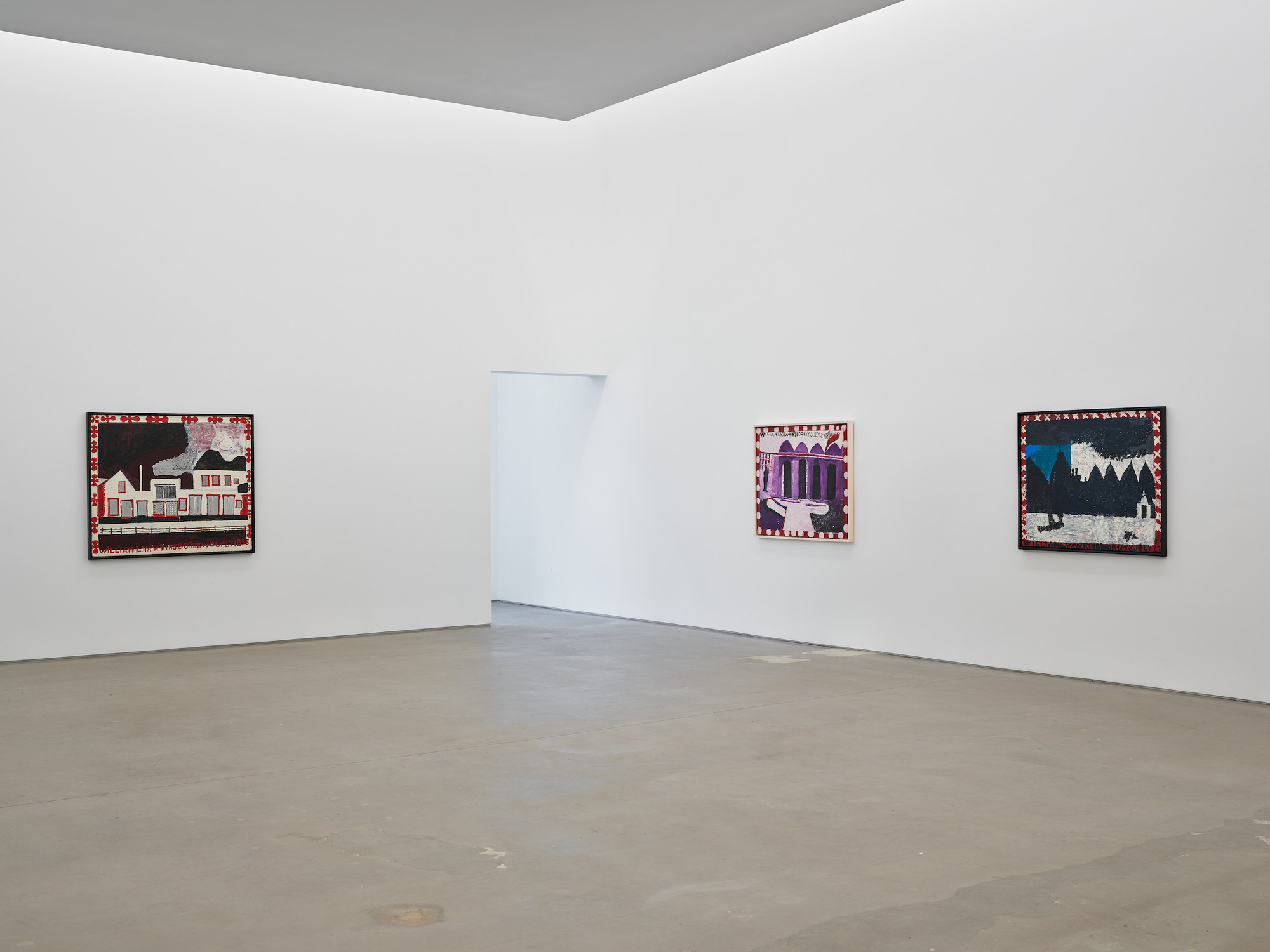
William L. Hawkins: Painted Places is an exhibition of works by the American artist William L. Hawkins (1895 – 1990). This is the first presentation in Los Angeles dedicated to the artist and the first to privilege the William Hawkins Collection Archive, made available in 2018. The exhibition focuses on paintings created between 1983 and 1989 that feature architecture and landscape, honoring the subject matter that marked the artist’s rise to acclaim. This selection traces how Hawkins reimagined cultural sites and reveals the way his innovative work reshapes historical accounts of painting in the 1980s. Hawkins defied the distinction between representation and abstraction, and in the process, altered the relationship between place, memory, and the public.
Born in Kentucky, Hawkins grew up at the turn of the twentieth century on his family’s expansive farm. He began drawing by copying illustrations from horse- auction announcements and calendars. Hawkins relocated to Columbus, Ohio, in 1916. In 1918, he enlisted in the U.S. Army and served as a Private in the 317th Corps of Engineers, an all-Black regiment, during World War I. Upon demobilization, he returned to Columbus, where he continued to draw while working intermittently in the construction industry. Hawkins sold his work for modest sums while he navigated the social and technological upheaval in his city and observed seismic change in the United States. Painting took prominence in Hawkins’ life in the mid-1970s, and soon after, his depictions of architectural facades earned him recognition in his home state. A selection of Hawkins’ breakthrough subject matter, made in the mid-1980s, is presented in this exhibition.
Hawkins’ depiction of local, prewar buildings coincided with the broader economic shift from industrialization to financial services in the United States—a transition that sent manufacturing overseas and sharply reduced jobs in the industries where the artist once worked. Against this backdrop of precarity, Hawkins asserted his presence. The artist focused on local landmarks and signed his vibrant paintings with his name, birthdate, and birthplace—a practice he extended to all his work, from letter-sized drawings to large-scale assemblage. By 1982, as an octogenarian, Hawkins secured gallery representation in New York, a devoted audience, and coverage in national outlets; articles in journals of contemporary and folk art followed.
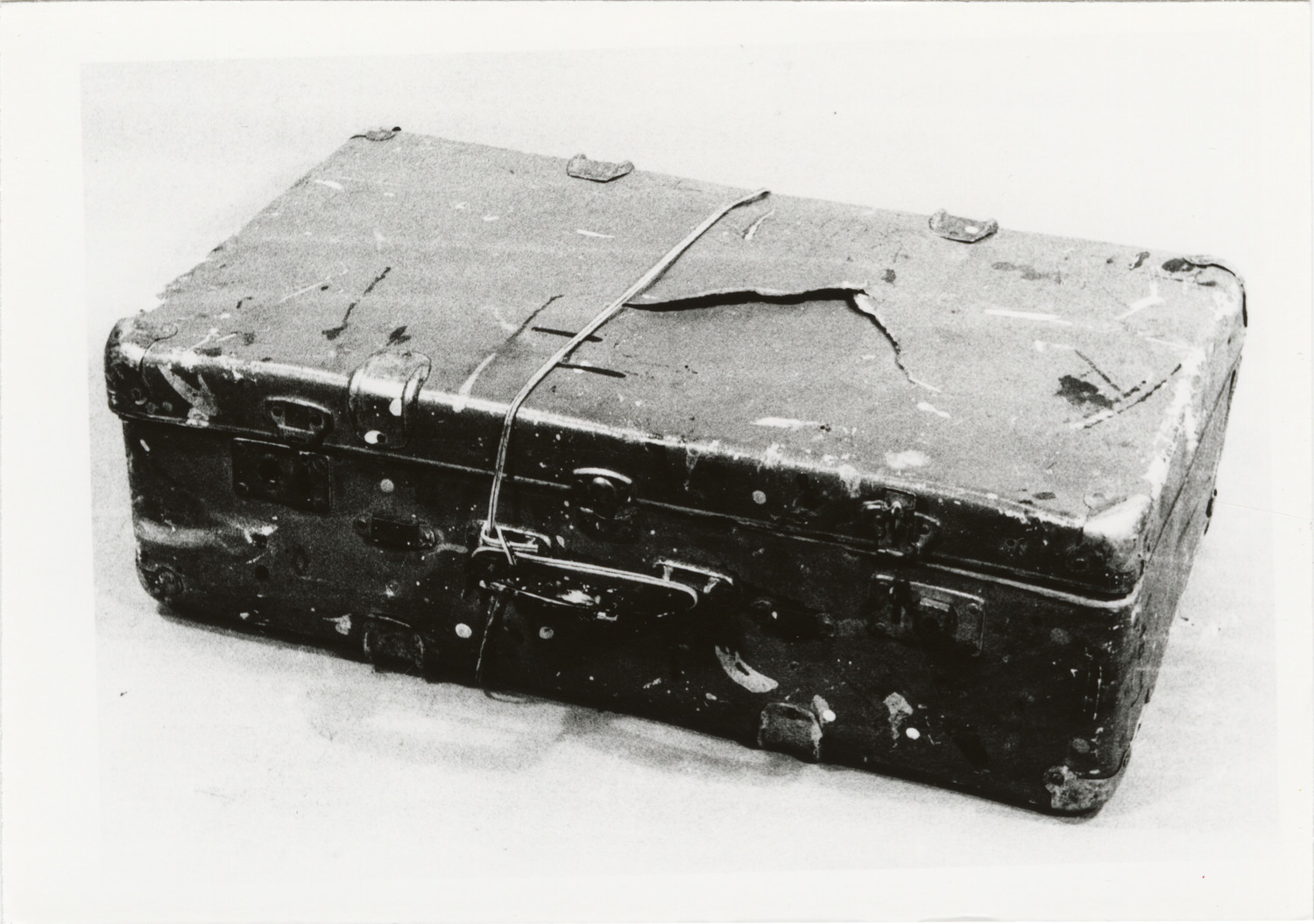
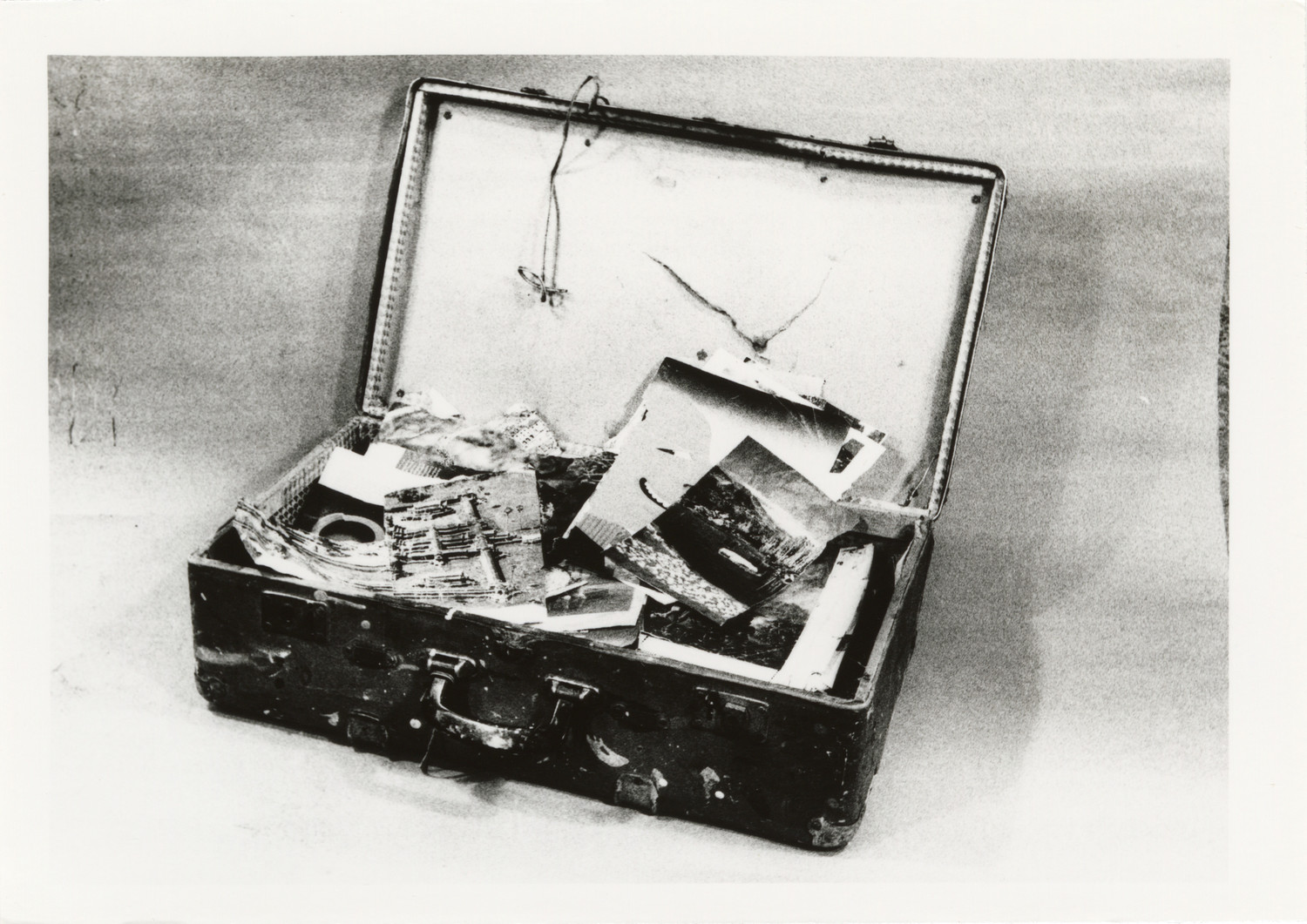
The artist’s paintings were inspired by images from mass media, including local newsprint, glossy magazines, and television. Hawkins salvaged printed matter in the Franklin Park neighborhood of Columbus, collecting postcards and discarded copies of his daily, The Columbus Dispatch, as well as Smithsonian Magazine, National Geographic, and Reader’s Digest. Giving equal attention to advertisements and to articles, he clipped out an eclectic array of images and stored them in a worn leather suitcase. From his home, Hawkins devised his take on local sites and the more distant places he knew through pictures, such as Niagara Falls and the Manhattan skyline. He experimented with enamel paint, applying layer upon layer to particle board with a stubby, worn brush. He alternated impressionistic passages with gridded patterns, and he outlined the overall compositions with decorative painted borders, which doubled as frames. The dynamic combinations resemble aspects of neo-expressionism while sustaining connections to African American aesthetics of reuse, haptics, and abstraction.
Seated, Hawkins used his clippings as source material and composed paintings in a manner reminiscent of quilt-making and of his Southern heritage. Through a deep color palette and innovative media —cornmeal, glitter, sawdust, and sand—Hawkins created tactility, so his viewers could “feel” the richly textured surface “puff up” from Masonite board. The exhibition’s subject matter ranges from local buildings to important landmarks, from the Ohio Statehouse to Jerusalem of the Bible. The selection foregrounds the methods that run throughout Hawkins’ commitment to “bring the picture out.”
William L. Hawkins: Painted Places will be accompanied by a richly illustrated catalog featuring new art-historical scholarship by leading and emerging scholars, as well as newly surfaced material from the William Hawkins Collection Archive, including rarely shared sources and photographs of the artist at work. The presentation is a research effort, and Maison d’Art extends sincere appreciation to the Ohio History Connection and Ricco/Maresca Gallery.
ABOUT WILLIAM L. HAWKINS:
William L. Hawkins (1895-1990) began drawing by copying illustrations from horse-auction announcements and calendars while growing up on his family’s lush Kentucky farm. He relocated to Columbus in 1916 and served in WWI in 1918. Upon demobilization, he continued to draw and sold his work for small sums while he worked on and off in the construction industry. Painting became central to his life at age 87, when his architectural facades earned him recognition in Ohio and invitations to present in New York, Chicago, and Boston. Posthumously, Hawkins became one of the first Black self-taught artists to have a monographic presentation at the Columbus Museum of Art in 1990, followed by a retrospective at the Museum of Folk Art, New York, in 1997, and a touring national retrospective in 2018. Hawkins’ painting has place in the permanent collections of the Smithsonian, the Philadelphia Art Museum, the Columbus Museum of Art, the Milwaukee Art Museum, and the High Museum of Art.